Mastering the Leica M3 Rangefinder: Mechanical Integrity and Field Operation
By Arthur Pendelton, Senior Technical Curator at Scenewonderstack
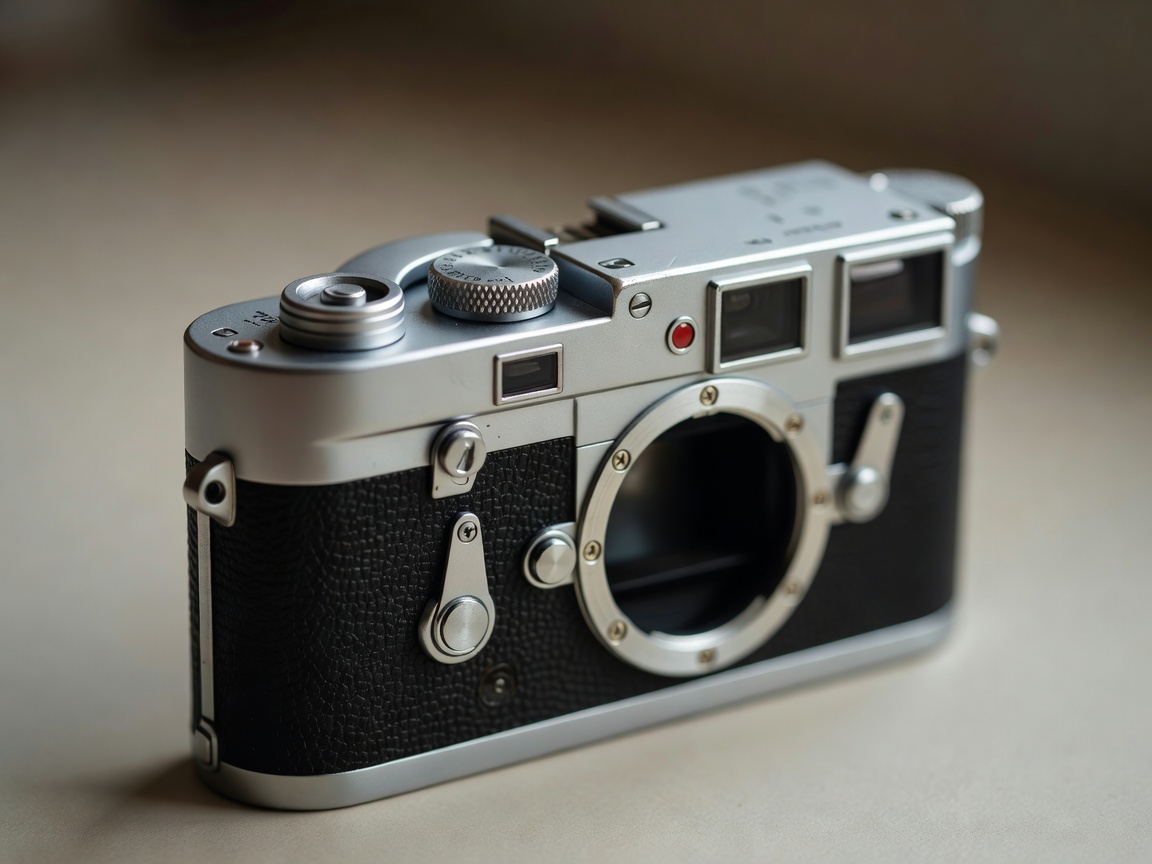
Introduced by Ernst Leitz in 1954, the Leica M3 represents the pinnacle of optical-mechanical engineering in 35mm photography. Over its 12-year production run (serial numbers 700 001 to 1 164 046), it introduced key innovations that defined rangefinder architecture for generations, including the unified viewfinder/rangefinder window and the M bayonet mount.
Viewfinder Magnification and Frame Lines
Unlike subsequent M models with 0.72x or 0.58x optical magnification, the Leica M3 features a remarkable 0.91x magnification viewfinder. This high magnification enables precise focus calibration when shooting fast lenses wide open, such as the 50mm Summicron f/2 or 90mm Elmarit f/2.8.
The M3 automatically projects bright-line frame sets depending on the mounted lens length: 50mm, 90mm, and 135mm. For 35mm focal lengths, an external viewfinder attached to the top cold shoe or specialized "goggled" 35mm lenses are required.
Technical Specifications Summary
| Specification | Detail Value |
|---|---|
| Shutter Mechanism | Horizontal rubberized cloth focal plane shutter (1s to 1/1000s + B) |
| Film Advance Type | Double Stroke (early models < 919 250) / Single Stroke (later models) |
| Viewfinder Magnification | 0.91x with automatic parallax compensation |
| Mount Type | Leica M Bayonet (compatible with LTM lenses via adapter) |
| Weight (Body Only) | Approx. 580 grams |
Rangefinder Calibration & Preventative Maintenance
To verify rangefinder horizontal calibration, position the camera exactly 2.00 meters away from a high-contrast target. Align the secondary coincident image patch. If a vertical shift or split overlap persists at infinity, adjustment is performed using the small roller screw accessible inside the top center of the lens mount throat.
For official documentation and factory service archives, visit the official Leica heritage registry at Leica Camera Official Site.